 01simulation
Why the lift goes the wrong way
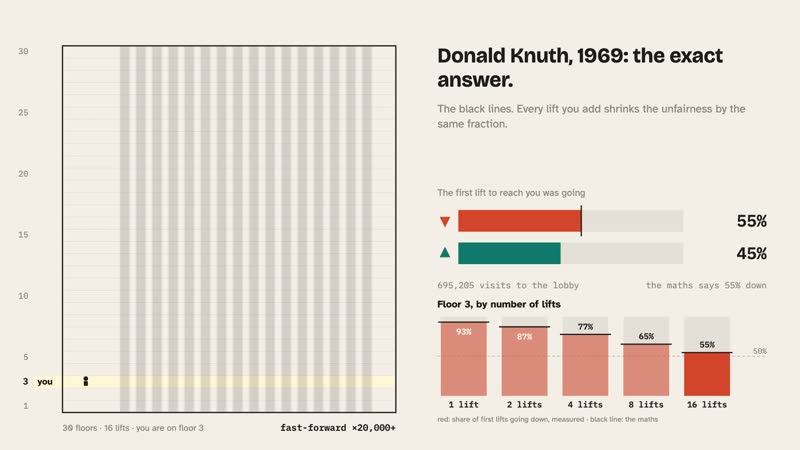
From floor 3 of a 30-floor tower, the first lift to arrive is going down 93% of the time. Your wait for one going up is the same on every floor.
30 films · 64 live pages
Short films about everyday puzzles and slow changes, where nothing on screen is an illustration. Either a working simulation is running and the numbers are measured from it as you watch, or real open data is shown exactly as it was recorded. Every film has a page here where you can run the same thing yourself.
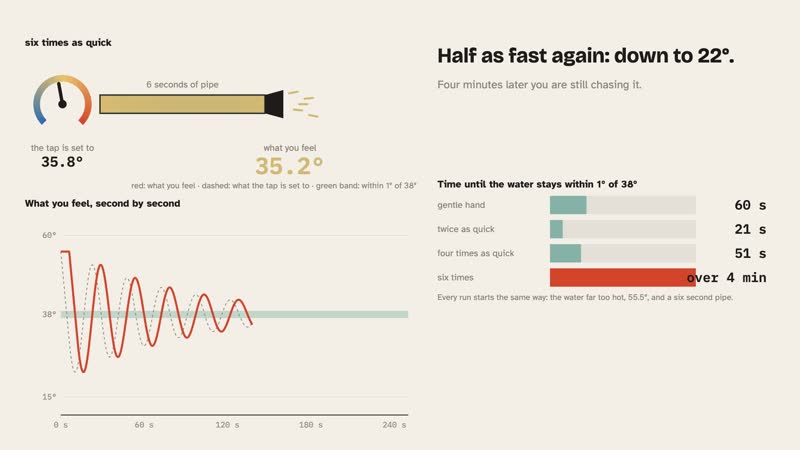
The water takes six seconds to reach you. Make the hand quicker and watch what a delay does.
What this is
Explainer videos usually ask you to trust the narrator and enjoy the animation. These films are built the other way round: the picture is the evidence, and the voice only tells you where to look.
If a claim can be run, it should not have to be believed.
Why it is made this way
The narration is an AI voice, and every film says so. A generated voice has no reputation to stake, so the trust has to come from somewhere else. Here it comes from the picture: a model you can run, or data you can look up.
Surprising results deserve a way to check them. That 45% of people in a supermarket queue are overtaken by someone who arrived later, or that the earliest sunset comes a week before the shortest day, sounds like something a video would make up. So each film ships with the thing itself.
Limits are part of the result. Every film ends with what the model leaves out or what the data cannot show. A number without its limits is an advertisement.
How a film is made
The script is written last but one, from numbers that already exist. That order is the whole method.
A simulation starts as a short list of rules in one file. A real-data film starts with a public source that anyone can download.
The model is run against a result that is known for certain. If they disagree, the model is wrong and nothing is filmed.
Long runs produce the figures. For real data, a script counts pixels, readings or earthquakes and writes down the method.
Only now is there a narration, and every figure in it comes from step three. The voice is generated; the words are checked against the measurements.
The film is the same page, stepped frame by frame, with the numbers computed again as it plays. Even the sound is calculated from the film's own events.
Each film closes on its limits, and each live page lists every rule. Where a spoken line turned out slightly off, the screen shows the measured figure.
The films
Each card opens the live page: the same model or the same data as the film, with the controls handed to you. The newest pages are up before their films; those are marked.
01simulationFrom floor 3 of a 30-floor tower, the first lift to arrive is going down 93% of the time. Your wait for one going up is the same on every floor.
 02real data
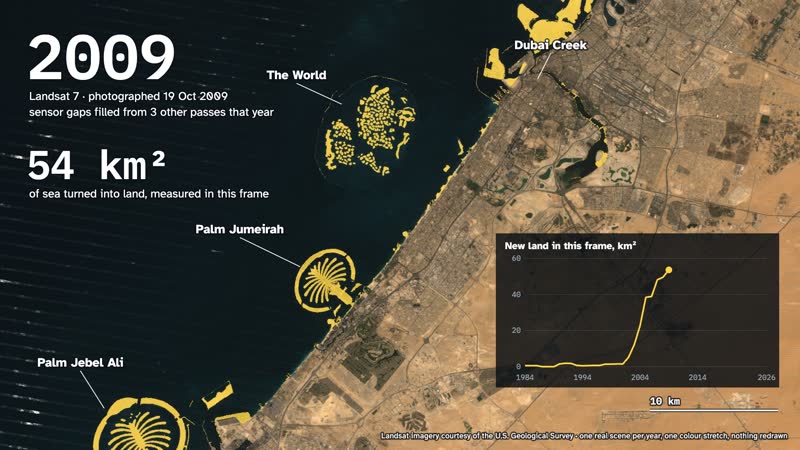
One satellite photograph a year. About 54 km² of sea became land, nearly all of it between 2002 and 2009.
 03simulation
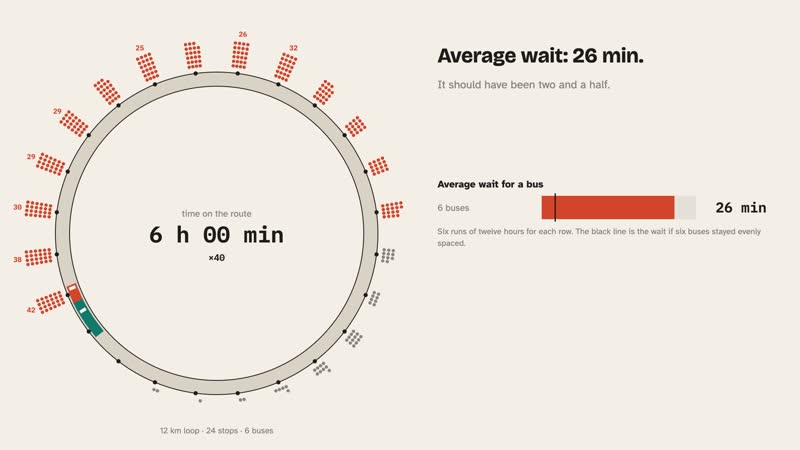
Six evenly spaced buses collapse into one convoy by themselves. Doubling the fleet barely helps. One small rule does.
 04real data
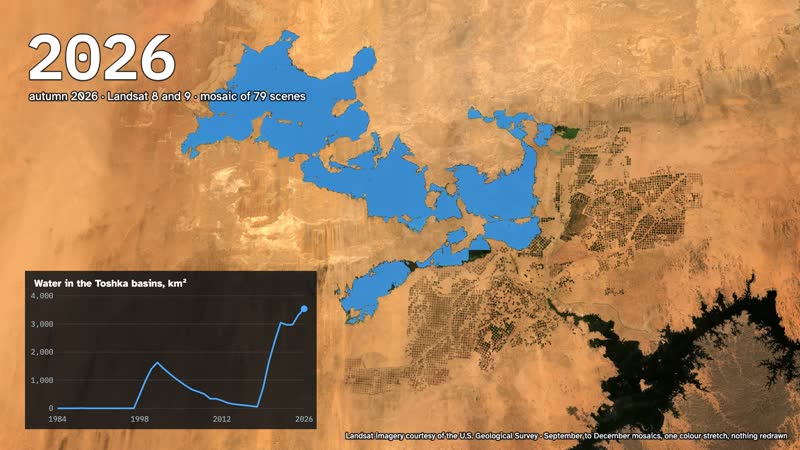
No water for 14 years, 1,630 km² of lakes by 2001, almost dry by 2018, and over 3,500 km² in 2026.
 05simulation
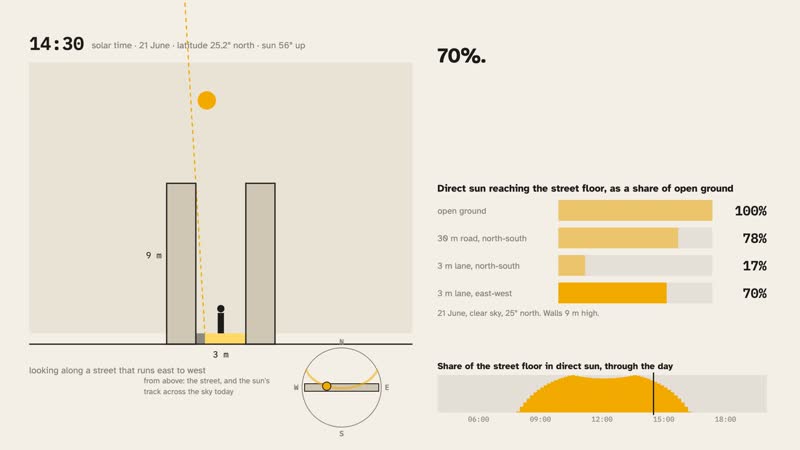
In June at 25° north, a 3 m lane takes 17% of the open-ground sun running north to south, and 70% running east to west.
 06real data
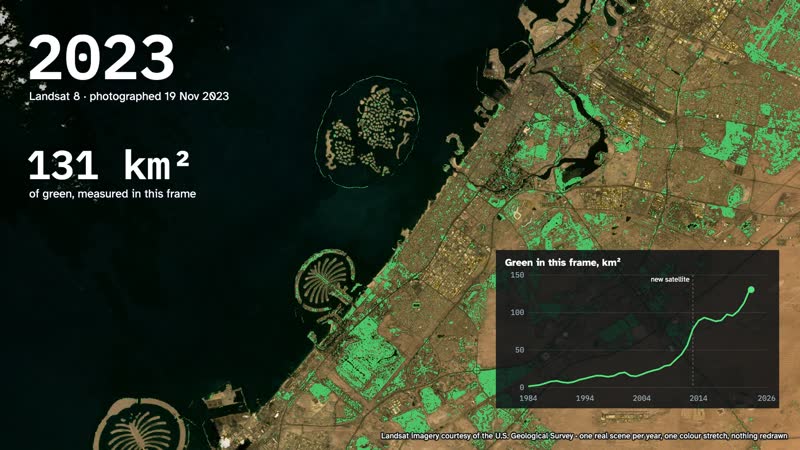
The same photographs, counted for plants: about 2 km² of green in 1984, over 100 now.
 07simulation
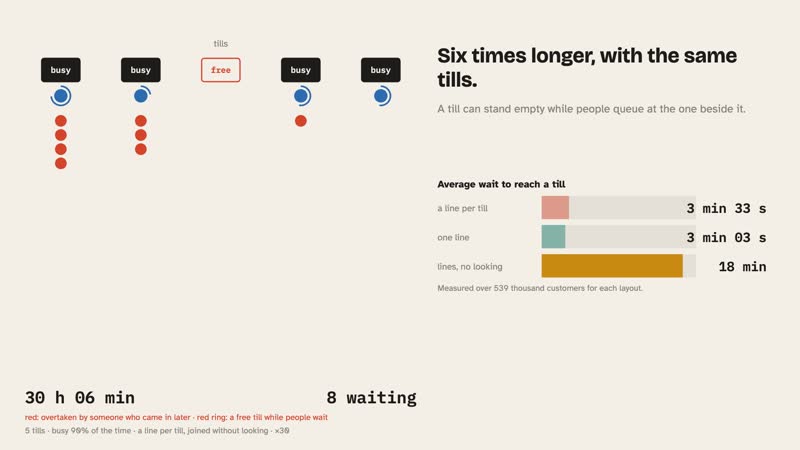
With a line at every till, 45% of customers are overtaken by someone who came in later. With one line, nobody is.
 08real data
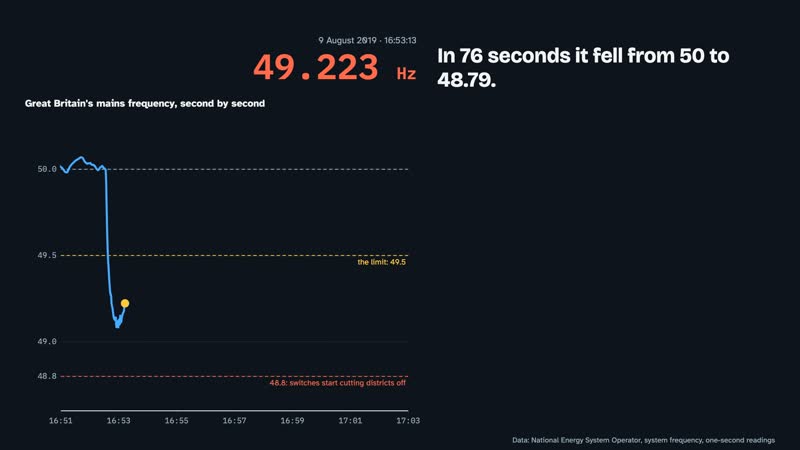
Great Britain's mains sat on exactly 50 hertz for about an hour in a month. In 2019 it fell to 48.79 in 76 seconds.
 09simulation
The water answers six seconds late, so a quicker hand settles slower. Past one speed it never settles.
 10real data
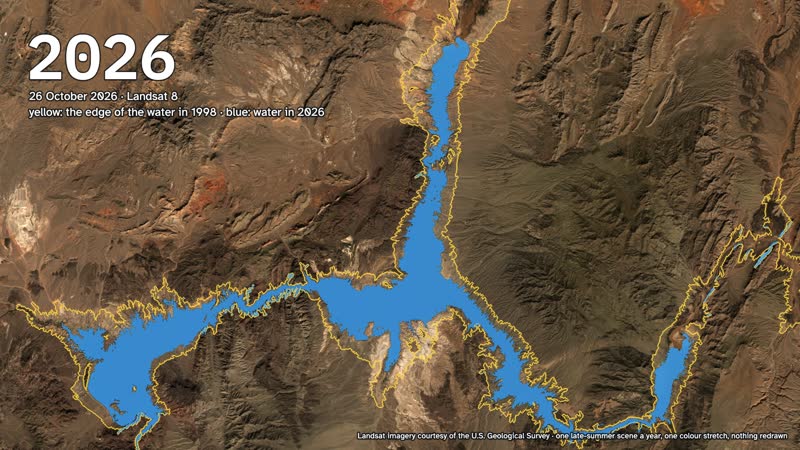
About 536 km² of water in this frame in 1998. 270 in October 2026, the lowest of 43 photographs.
 11simulation
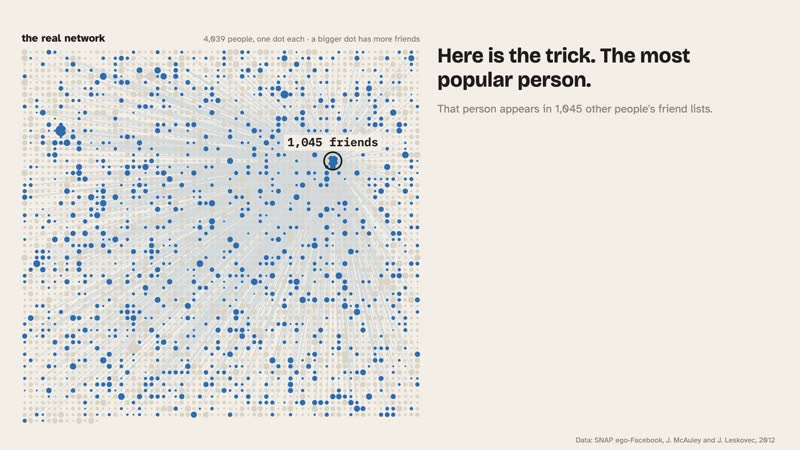
In a real network of 4,039 people, 87.5% have fewer friends than their friends do. It is about who gets counted.
 12real data
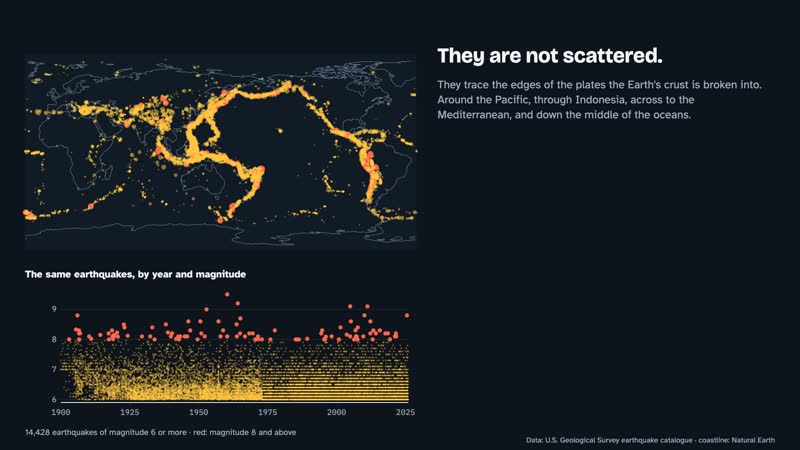
Every step down in magnitude has about ten times as many. Where the line bends is what the instruments cannot hear.
 13simulation
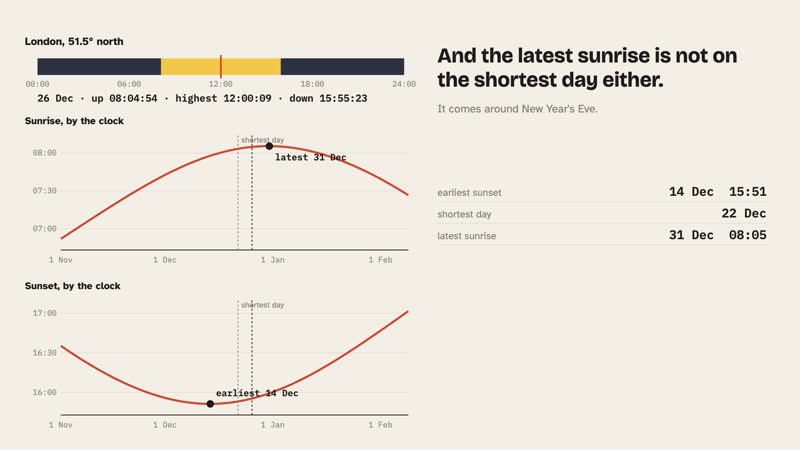
In London the earliest sunset and the latest sunrise are 17 days apart. In Singapore, 101.
 14real data
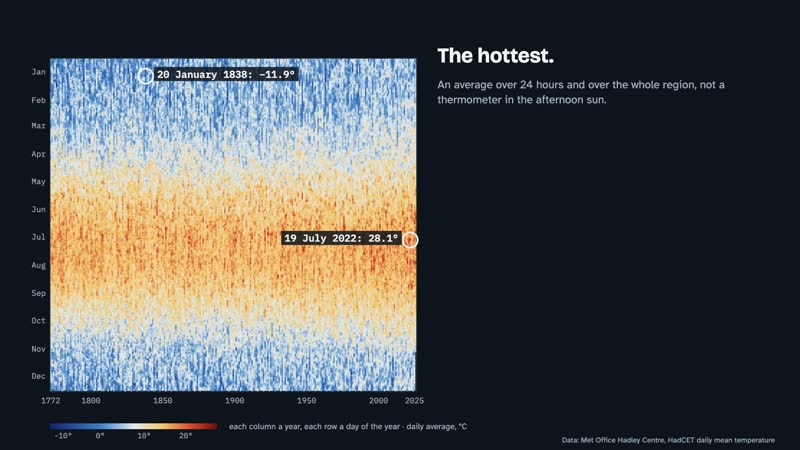
Every day in central England since 1772. The ten warmest years are all since 2006.
 15simulation
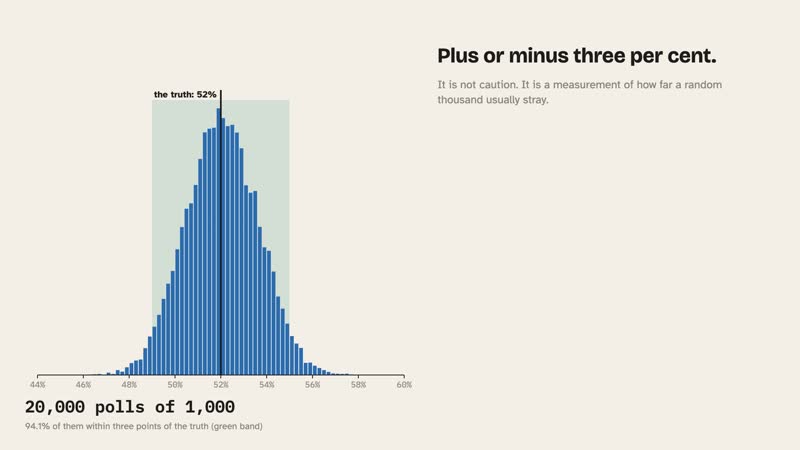
A random thousand is within three points 94% of the time. Tilt who answers, and a bigger poll gets surer of the wrong winner.
 16real data
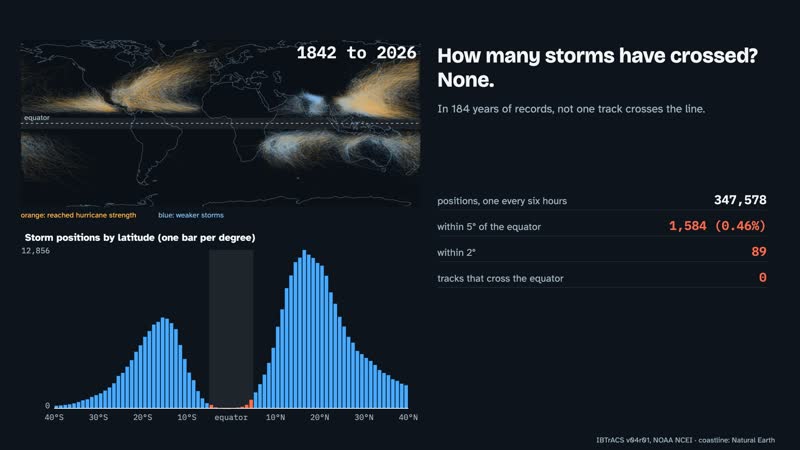
13,000 storm tracks since 1842 leave an empty strip along the equator. Positions within two degrees of it: 89 of 347,578.
 17simulation
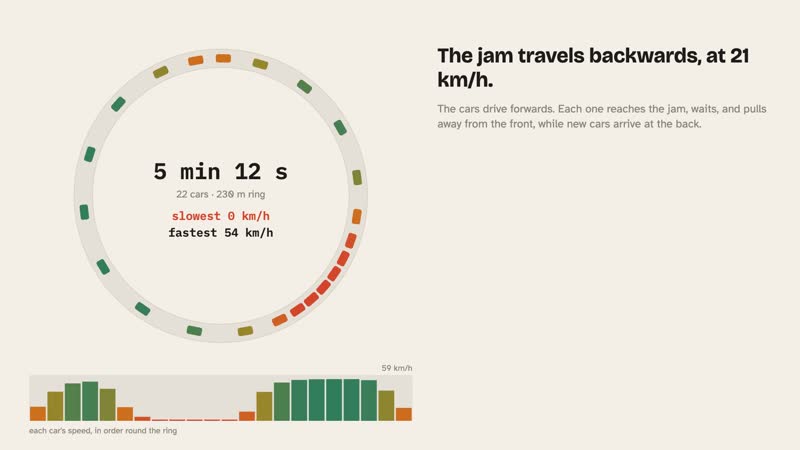
Twenty-two evenly spaced cars on a ring make their own jam in two minutes. Seventeen cars carry more traffic than twenty-two.
 18real data
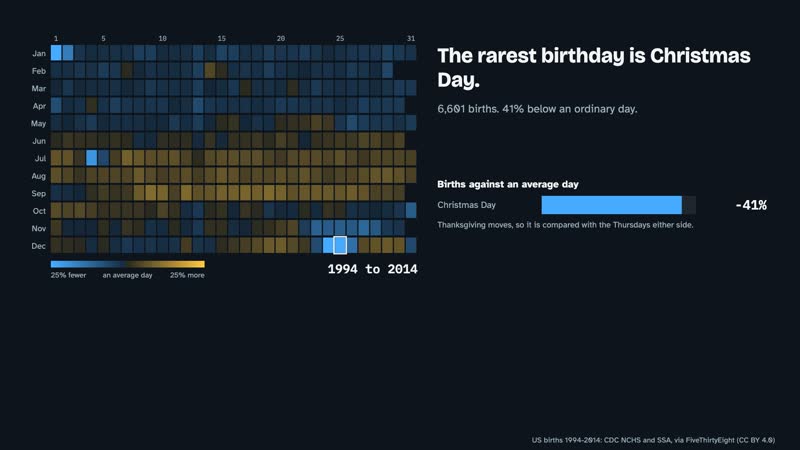
85.7 million US births by date. Christmas Day is 41% below an ordinary day, and weekends a third below weekdays.
 19simulation
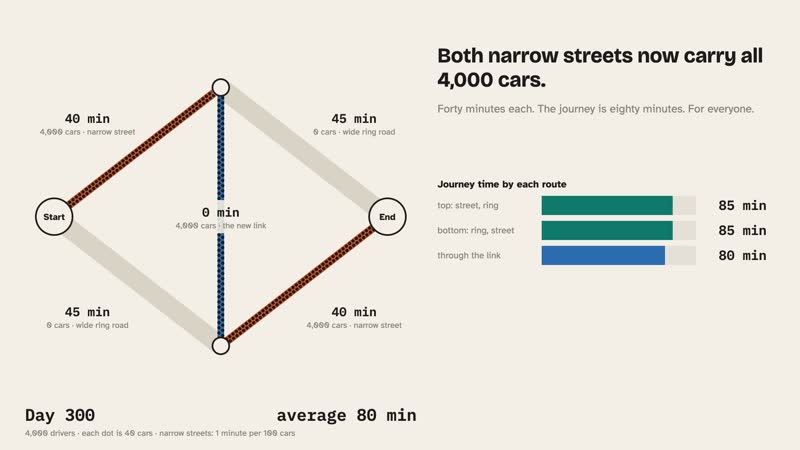
4,000 drivers take 65 minutes each. Add a shortcut that takes no time, and all of them take 80.
 20real data
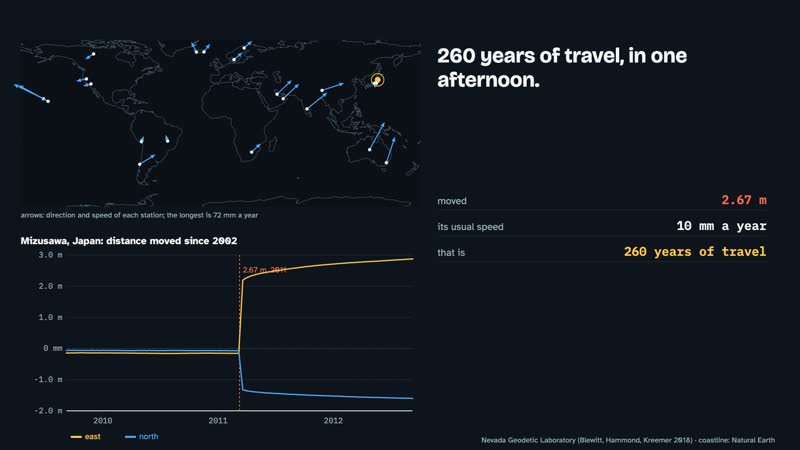
Hawaii travels 72 mm a year. On 11 March 2011 a station in northern Japan moved 2.67 metres in an afternoon.
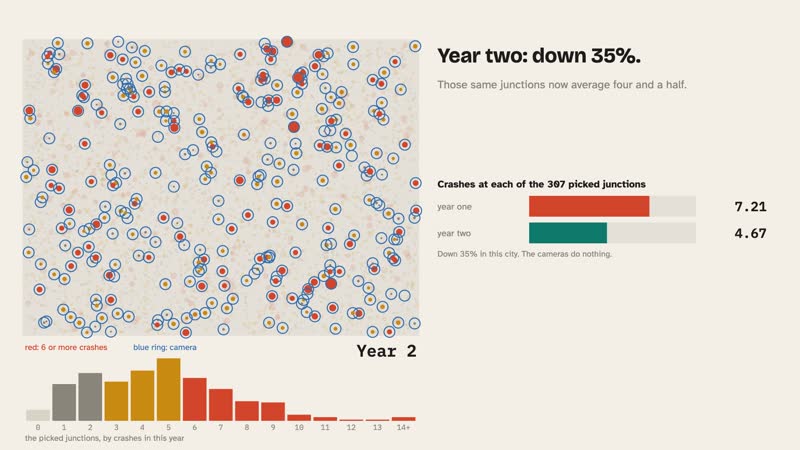 21simulation
Cameras that do nothing, put on the 300 worst junctions, are followed by 35% fewer crashes. The junctions were picked on a bad year.
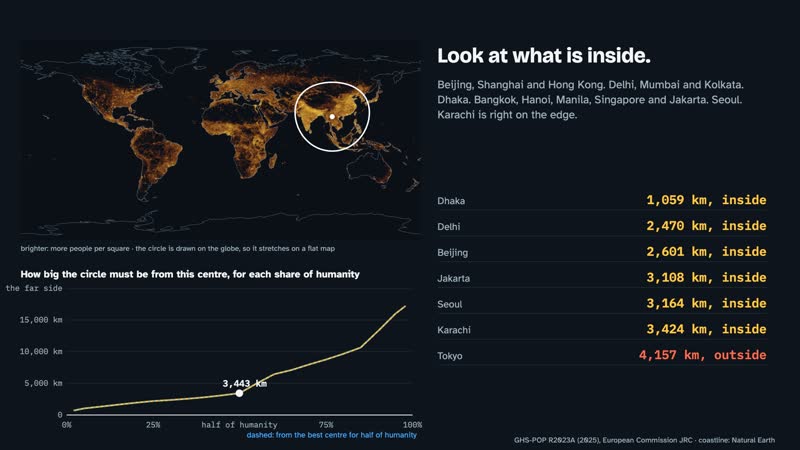 22real data
The smallest circle holding half of all people: 3,440 km around eastern Myanmar, 7% of the planet.
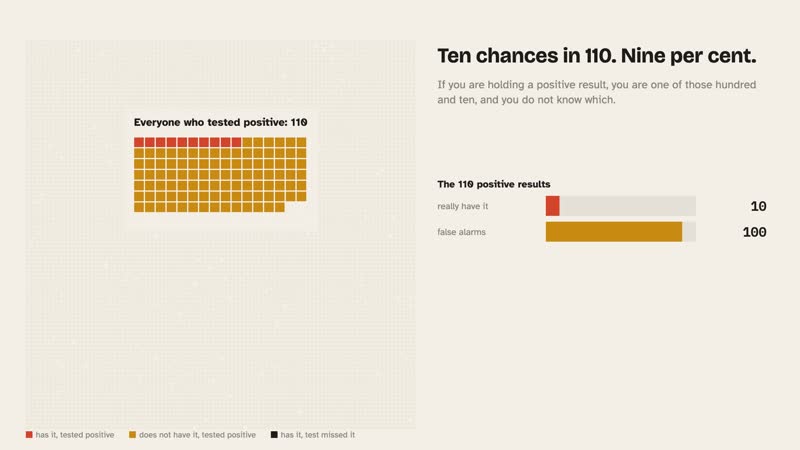 23simulation
Test 10,000 people for a disease one in a thousand has. 110 positives, 10 of them real: nine per cent.
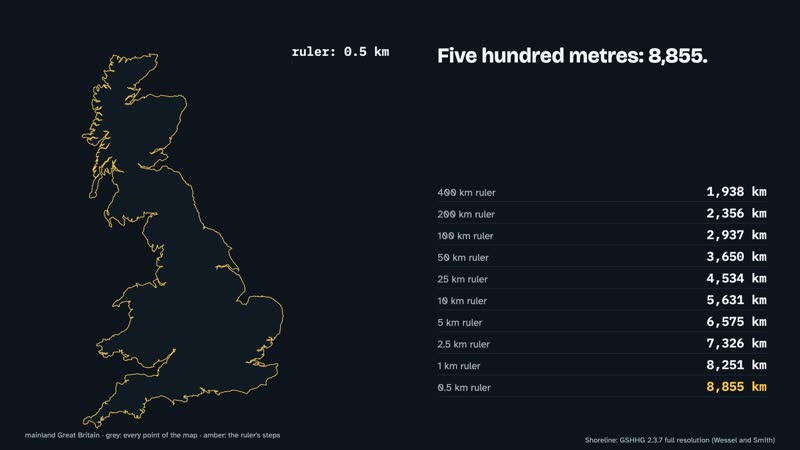 24real data
1,938 km with a 400 km ruler, 8,855 km with a 500 metre one. A coast has a length for each ruler.
 25simulation
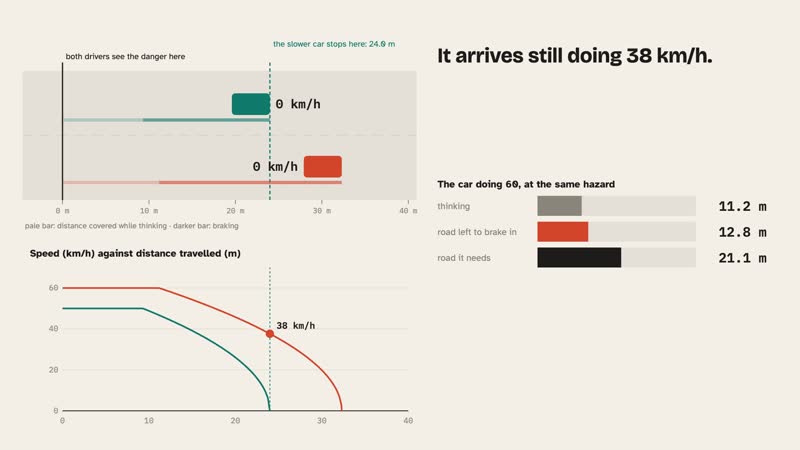
A car at 50 km/h stops in 24 metres. One at 60 that brakes at the same instant is still doing 38 there.
 26real data
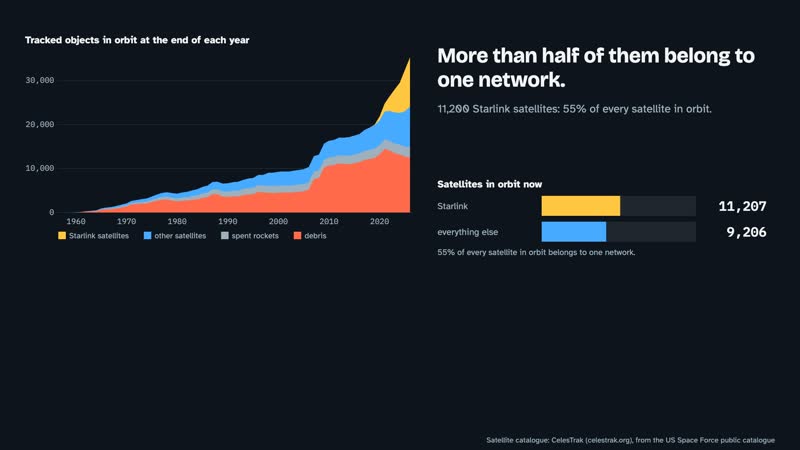
About 35,000 tracked objects. Satellites went from 5,000 to more than 20,000 in under eight years.
 27simulation
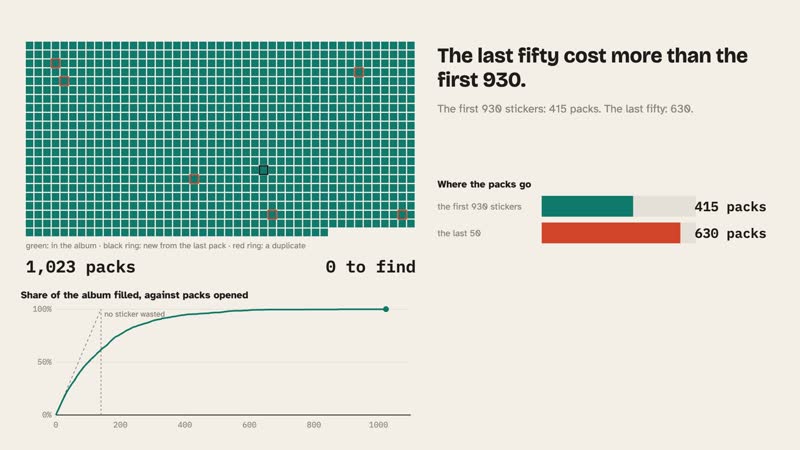
A 980-sticker album takes 1,046 packs on average. The last 50 stickers cost more than the first 930.
 28real data
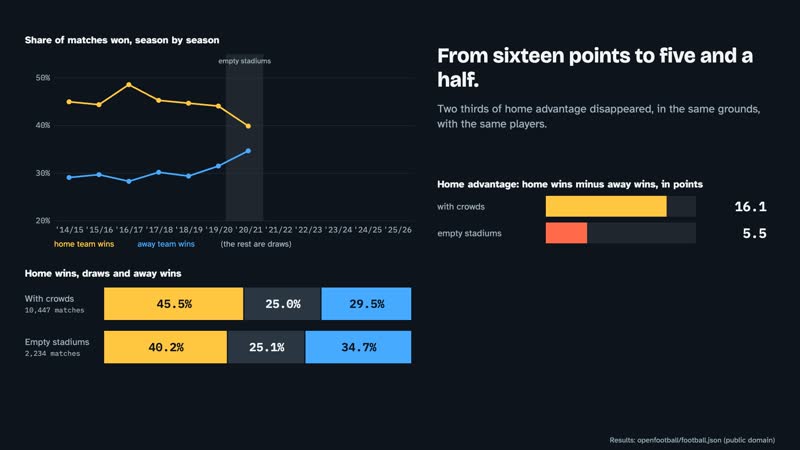
In five leagues the home side's edge was 16 points with crowds and 5.5 in empty stadiums.
 29simulation
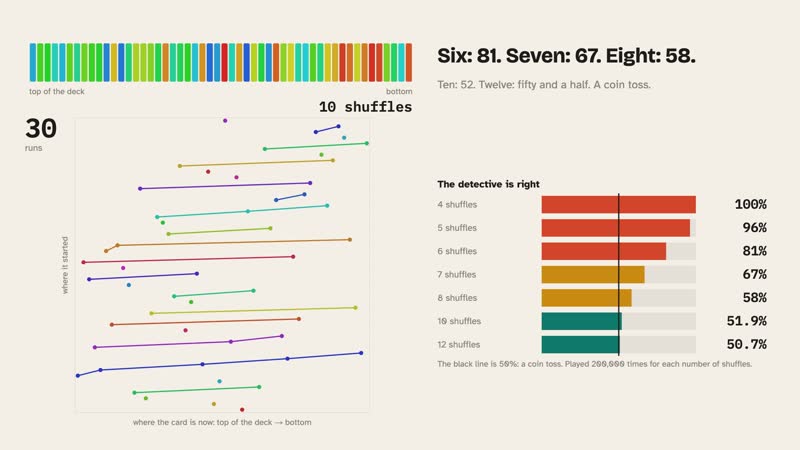
After four riffles a deck can be told from a mixed one essentially every time. Around seven it starts to mix.
 30real data
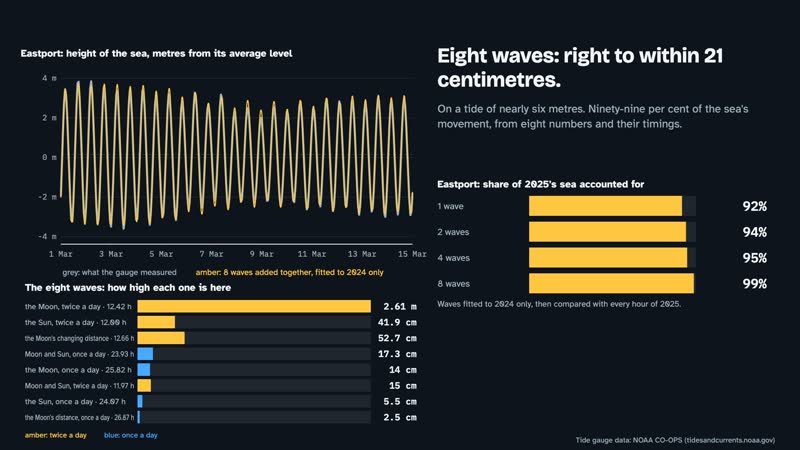
Eight waves fitted to one year of tide readings in Maine predict the next year to within 21 cm.
 31simulation
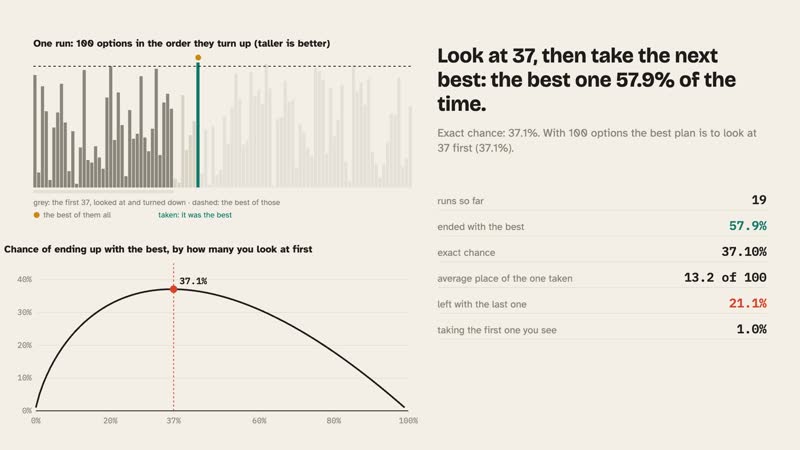
A hundred options, seen once each, no going back. Look at 37, then take the next one that beats them all: you get the best 37% of the time.
 32real data
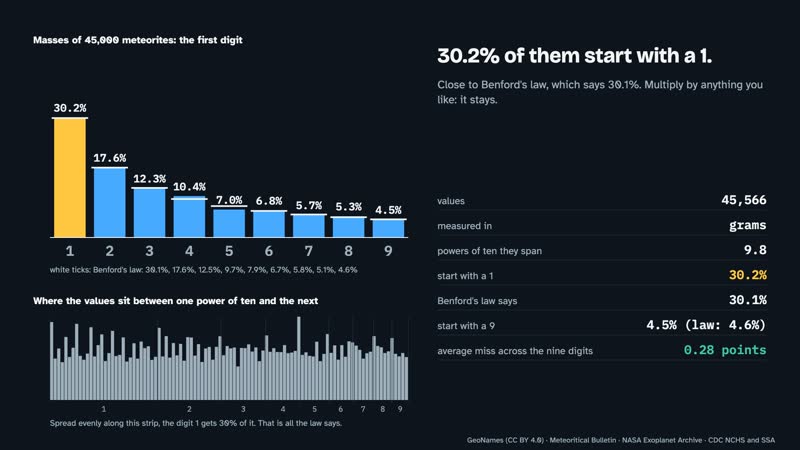
Three in ten meteorite masses start with a 1, and under one in twenty with a 9. Daily birth counts do nothing of the kind.
 33simulation
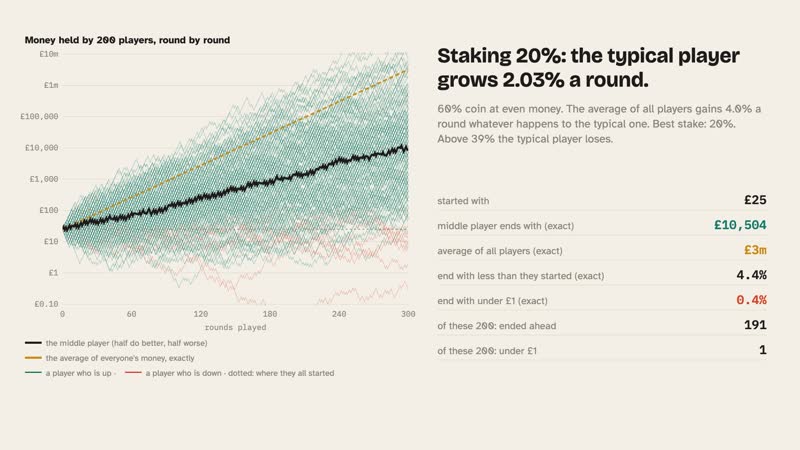
A coin that lands your way 60% of the time. Stake half your money each round and the typical player is ruined.
 34real data
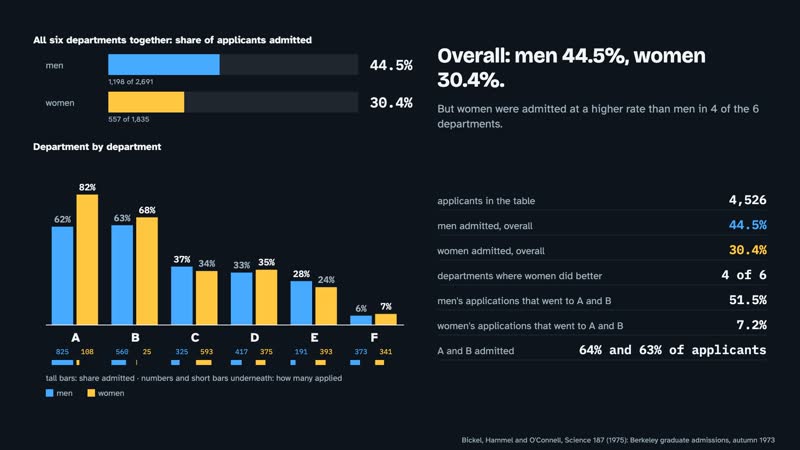
Berkeley, 1973: men 44% admitted, women 30%. Department by department, women did better in four of six.
 35simulation
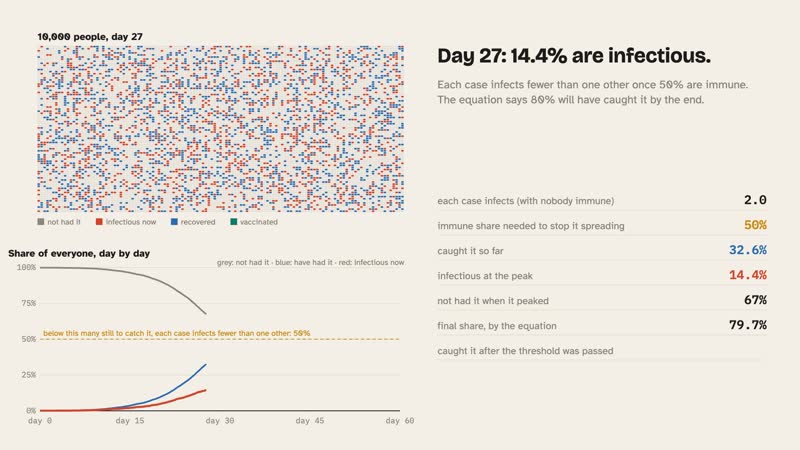
Herd immunity arrives at the peak, not the end. With each case infecting two others, 50% is the threshold and 80% catch it.
 36real data
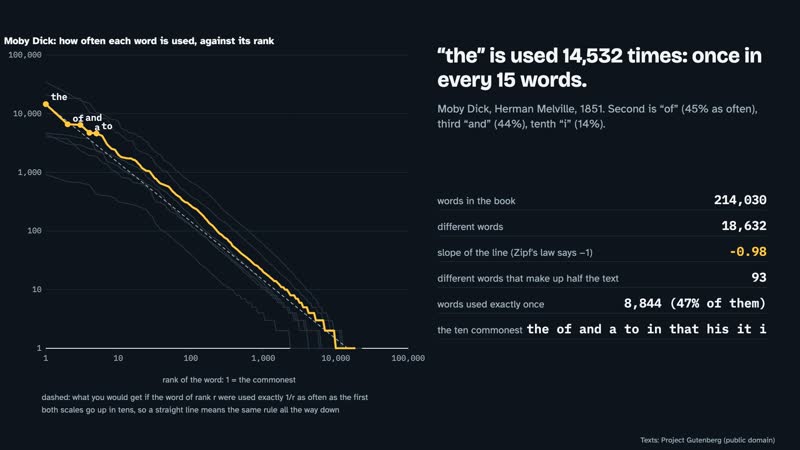
Count every word in a book and rank them. In seven books and five languages the counts fall on the same straight line.
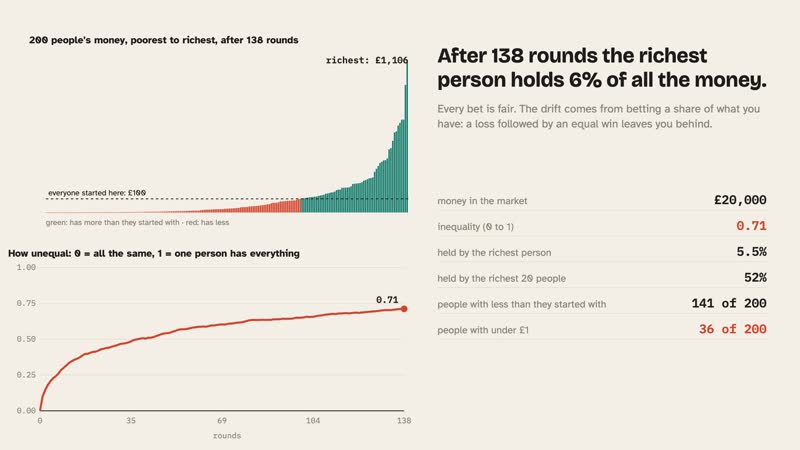 37simulation
Two hundred people swap small fair bets. No one cheats and no money leaves, yet one of them ends up with nearly all of it.
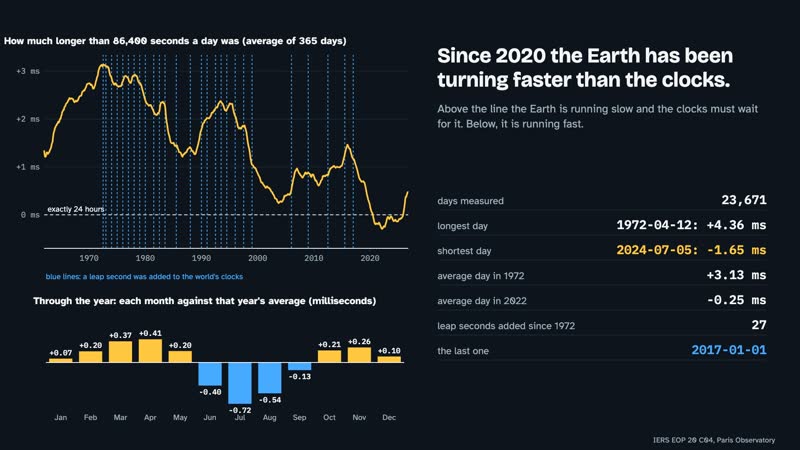 38real data
Every day since 1962, timed to a hundredth of a millisecond. Since 2020 the Earth has been turning faster than the clocks.
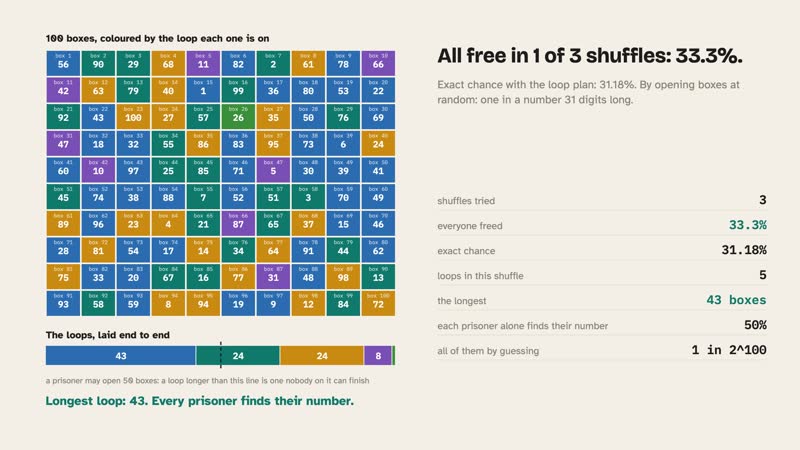 39simulation
Guessing frees them once in a number with 31 digits. Following the numbers round in loops frees them 31% of the time.
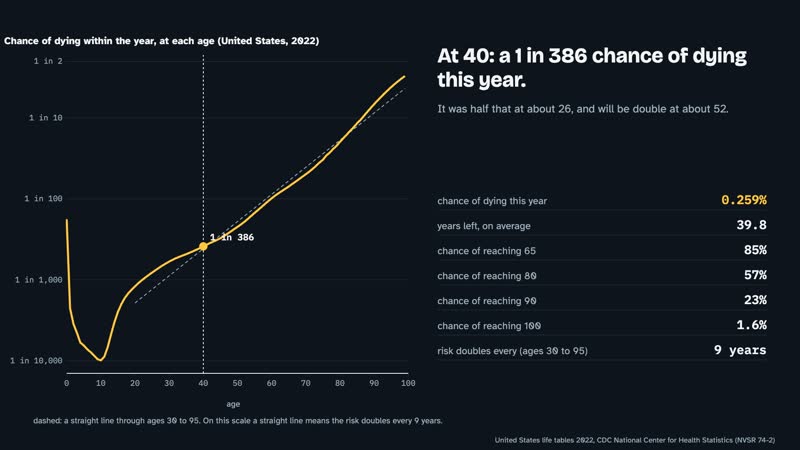 40real data
From the US life table: the chance of dying in the coming year is lowest at ten, then doubles about every nine years.
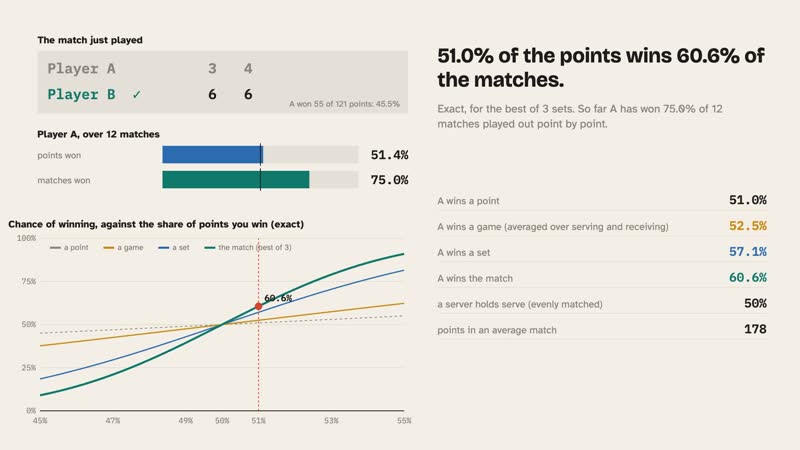 41simulation
Tennis scoring magnifies a small edge: 51% of the points wins 61% of best-of-three matches.
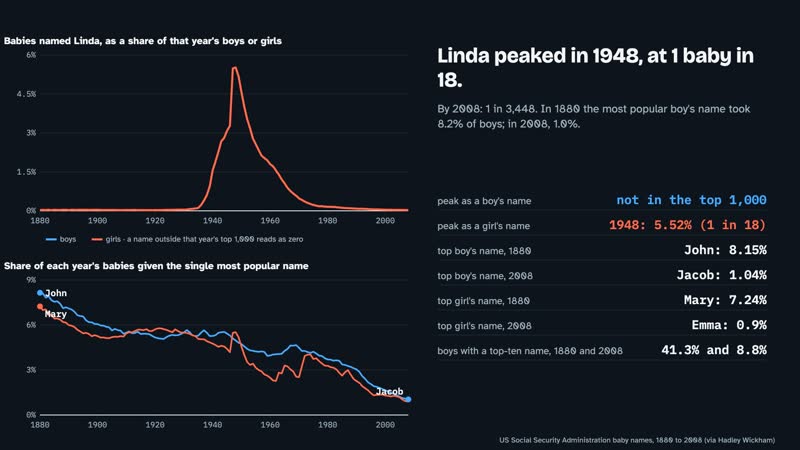 42real data
In 1880 one American boy in twelve was called John. By 2008 the top name went to one in a hundred.
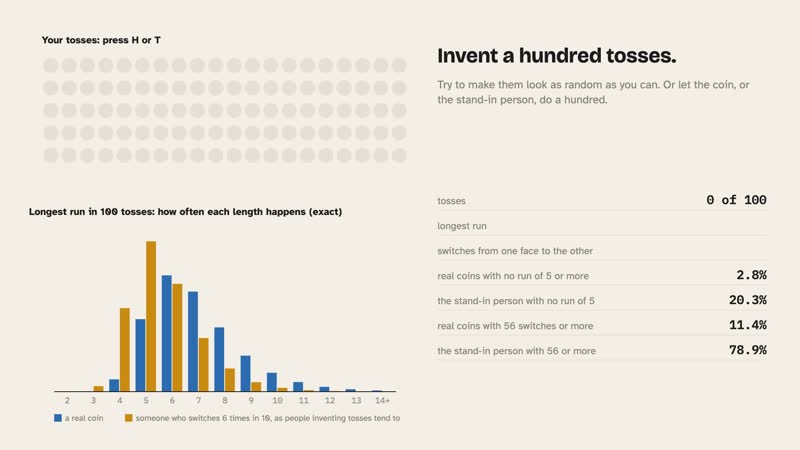 43simulation
A hundred real tosses nearly always hold a run of five. People inventing tosses break their runs up. Try it.
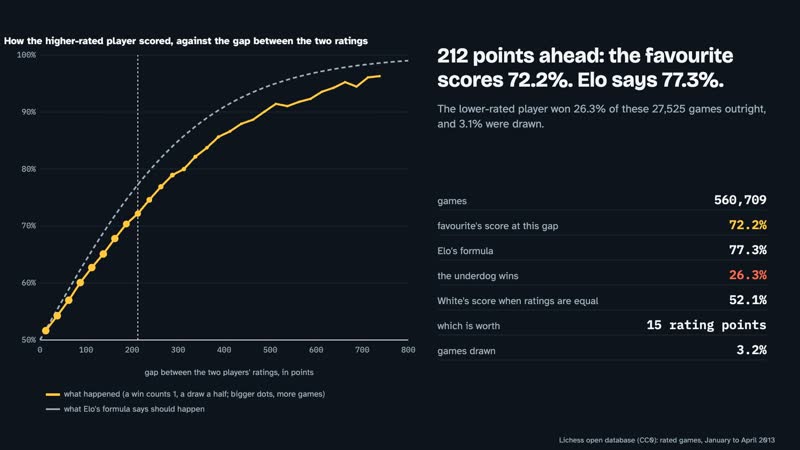 44real data
560,709 online games against Elo's curve. It is close, and a little too sure of the favourite.
 45simulation
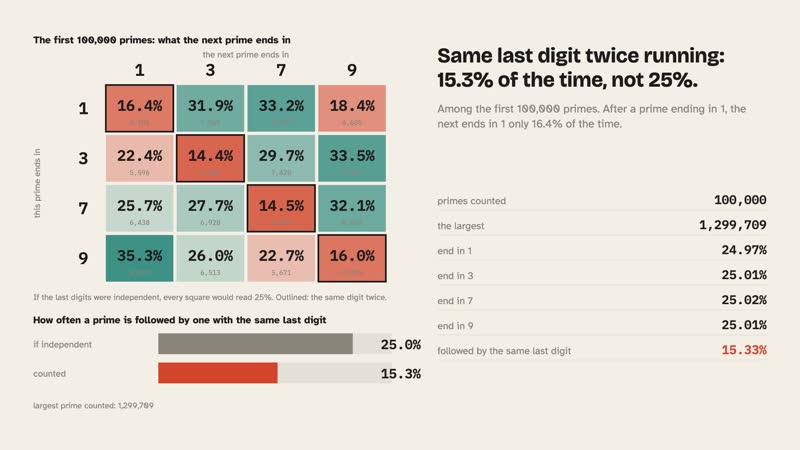
A prime ending in 1 is followed by another ending in 1 only 18% of the time, not 25%. Noticed in 2016.
 46real data
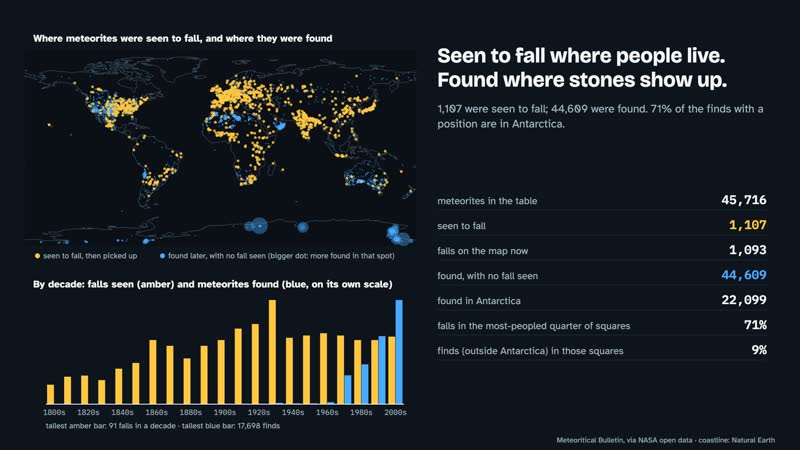
Seen falls follow people. Finds follow ice and deserts: 71% of them are from Antarctica.
 47simulation
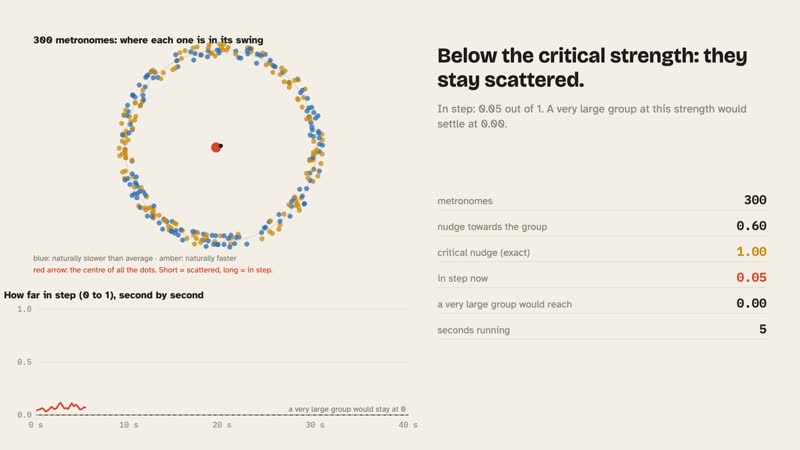
Three hundred metronomes at different tempos. Below one strength of nudge, nothing. Above it, they lock.
 48real data
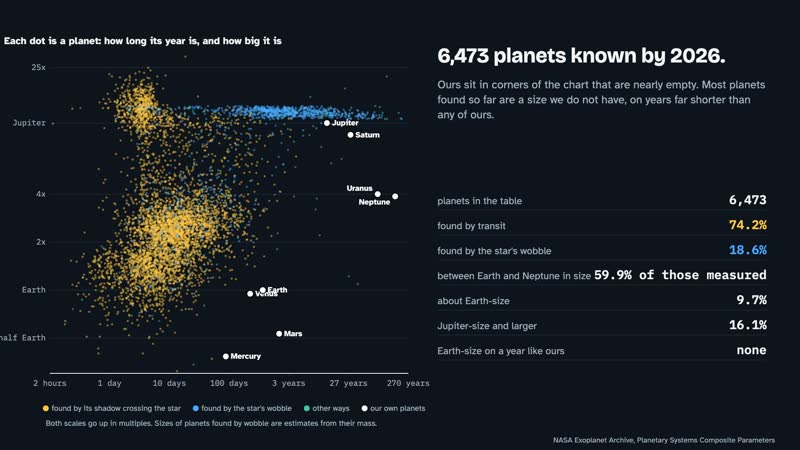
Six thousand known planets. Most are a size our solar system does not have, on years shorter than Mercury's.
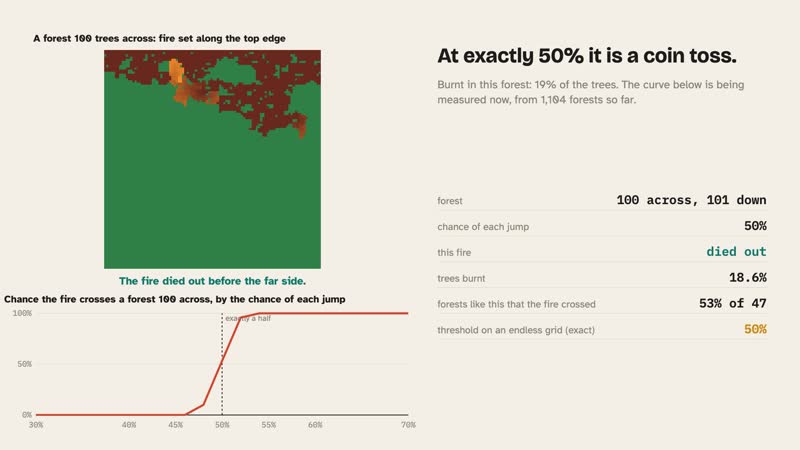 49simulation
Fire through a forest where each jump succeeds with a fixed chance. The threshold is exactly a half.
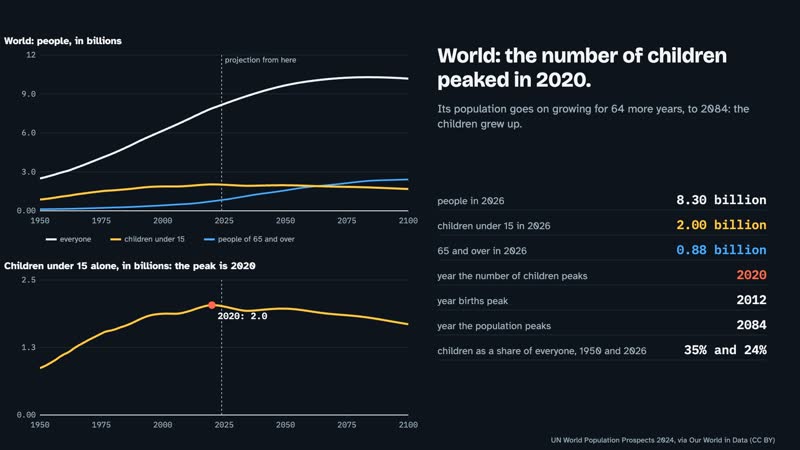 50real data
The number of children in the world peaked in 2020. The population keeps growing until 2084.
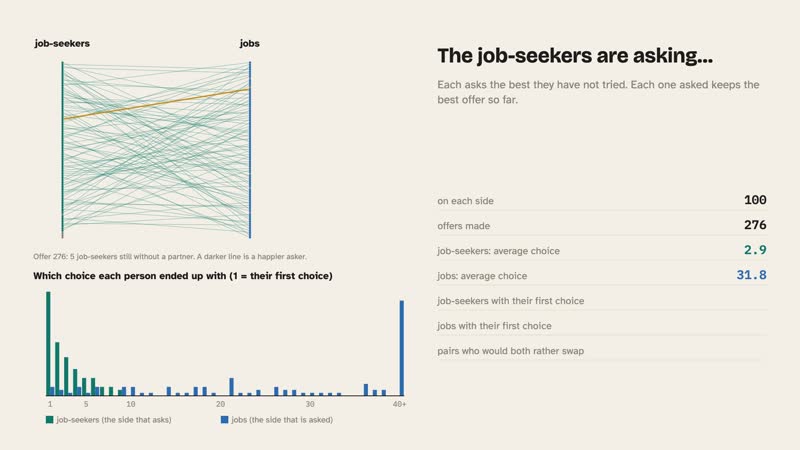 51simulation
A hundred a side, everyone with their own preferences. The side that asks gets its 5th choice. The other side gets its 20th.
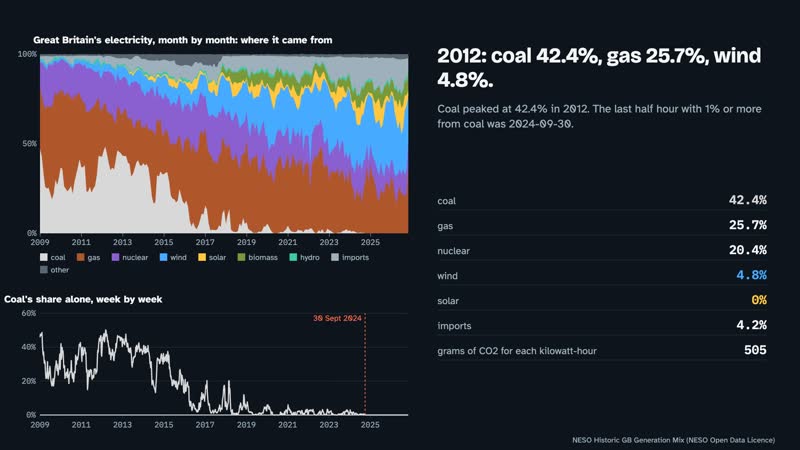 52real data
Great Britain's electricity every month since 2009: coal from 42% in 2012 to nothing in 2024.
 53simulation
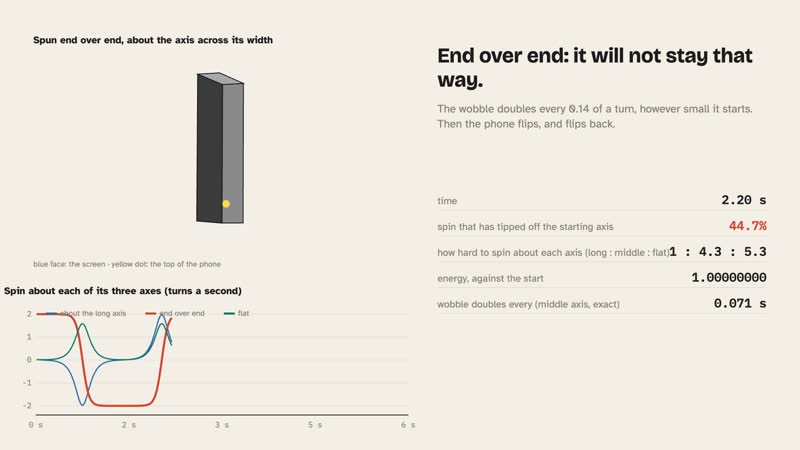
A box spins steadily about two of its axes and tumbles about the third, however carefully it is thrown.
 54real data
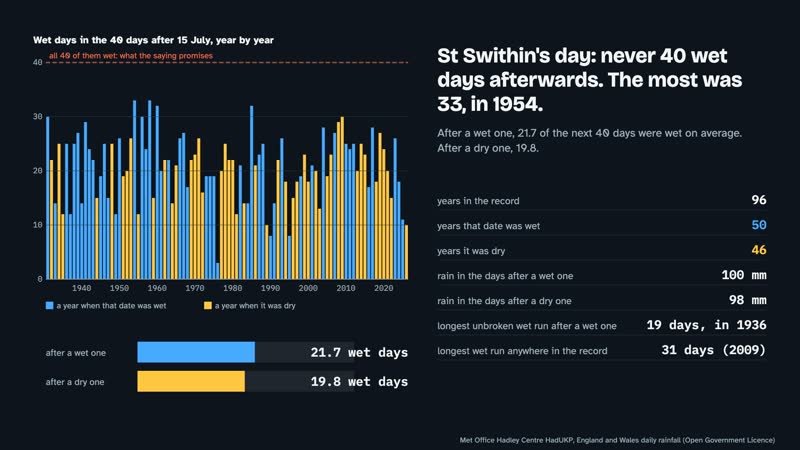
St Swithin's day against 96 years of rain. Never forty wet days after it. The most was 33.
 55simulation
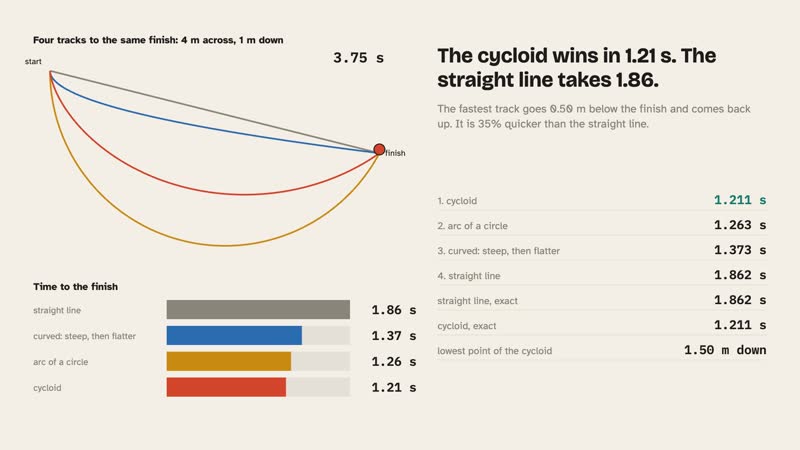
Four tracks, one finish. The straight line comes last. The winner dips below the finish and climbs back.
 56real data
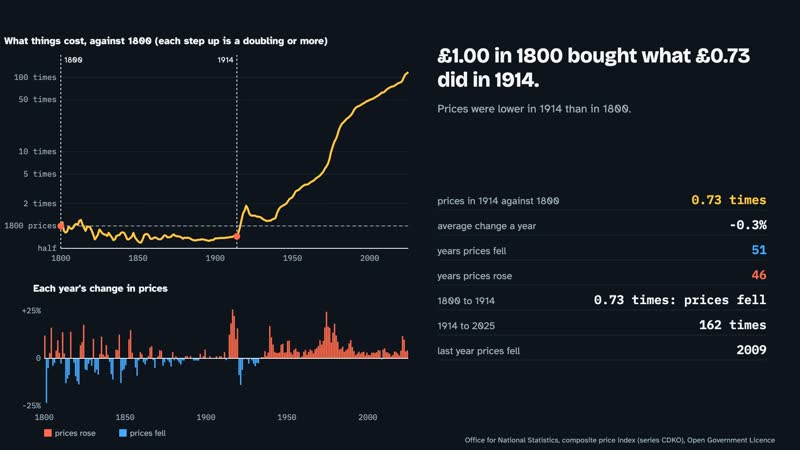
British prices were lower in 1914 than in 1800. Since 1945 they have fallen in one year out of eighty.
 57simulation
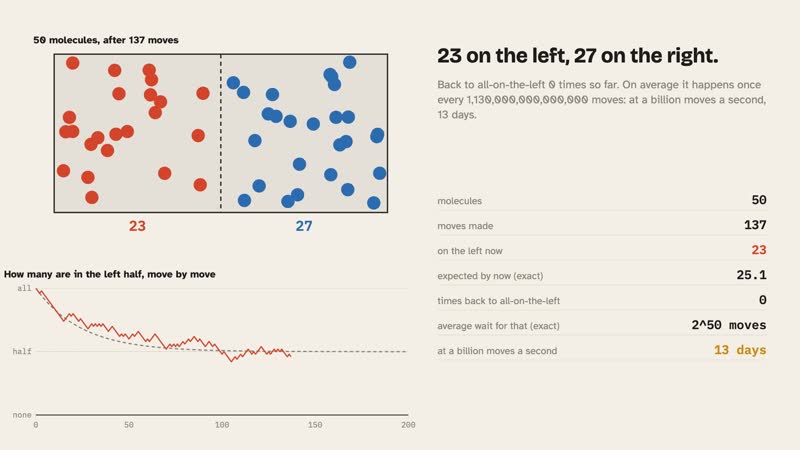
Molecules hop at random between two halves of a box. Every hop can be undone. The whole never goes back.
 58real data
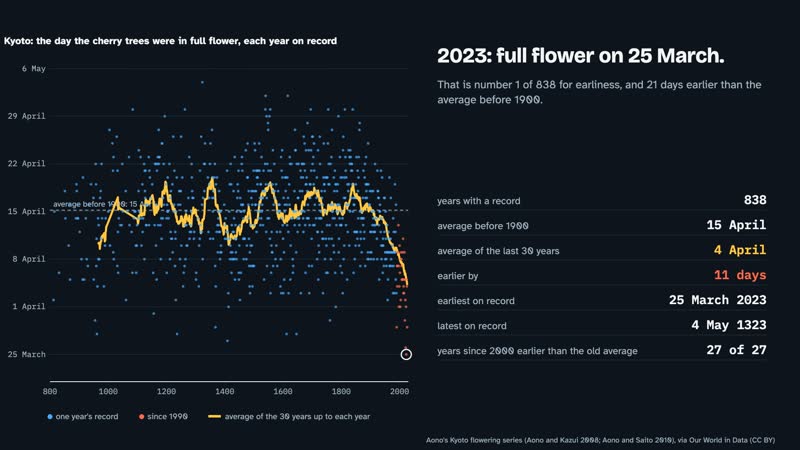
Kyoto's flowering dates since 812. Mid-April for a thousand years. The 30-year average is now 4 April.
 59simulation
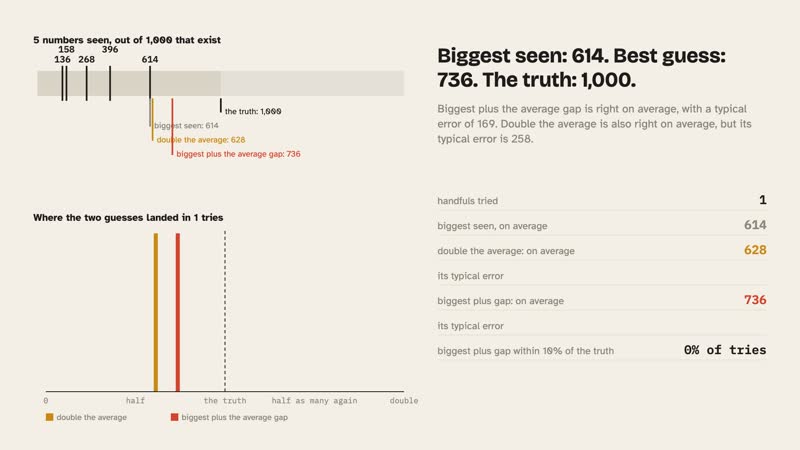
From a handful of serial numbers, how many were made? The biggest seen, plus the average gap.
 60real data
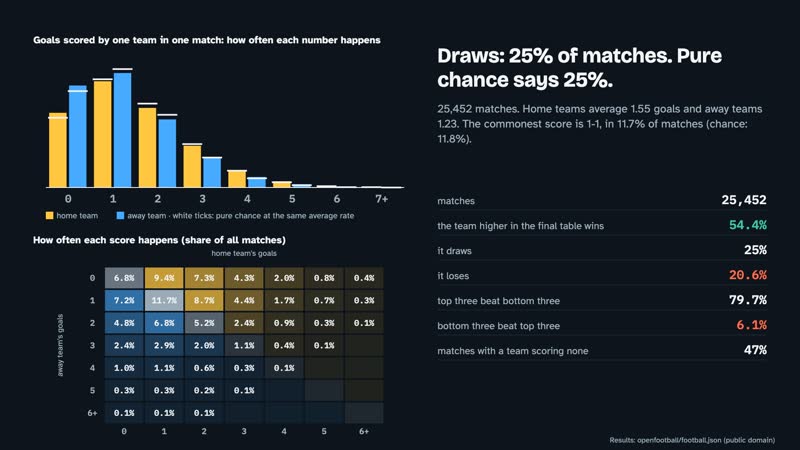
Goals in 25,000 matches follow the pattern of pure chance. The better team wins 54% of the time.
 61simulation
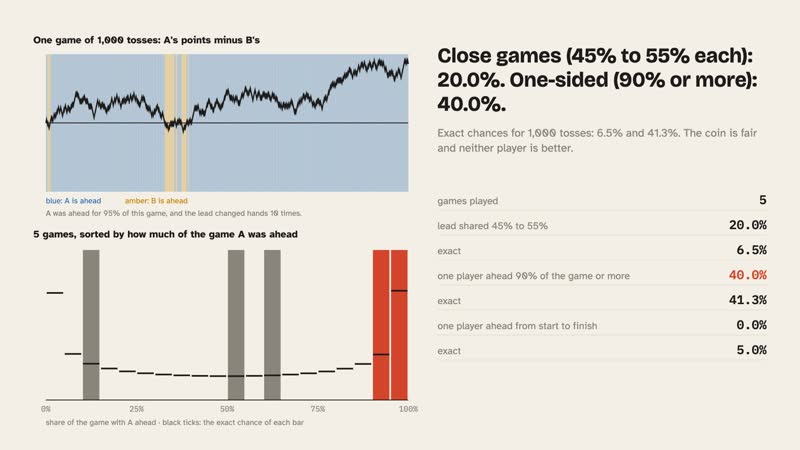
In a fair coin game the least likely thing is an even share of the lead. One side usually leads almost throughout.
 62simulation
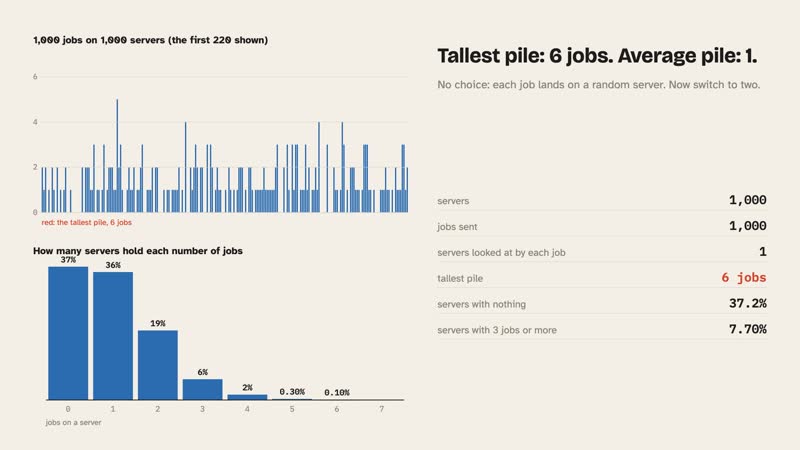
Jobs sent to servers at random pile up. Let each look at two and take the quieter, and the worst pile collapses.
 63simulation
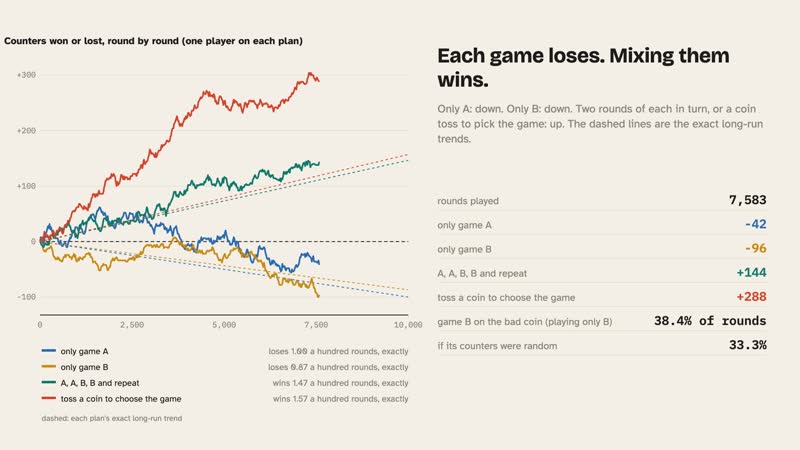
Game A loses. Game B loses. Two rounds of each in turn wins, and so does picking between them at random.
 64simulation
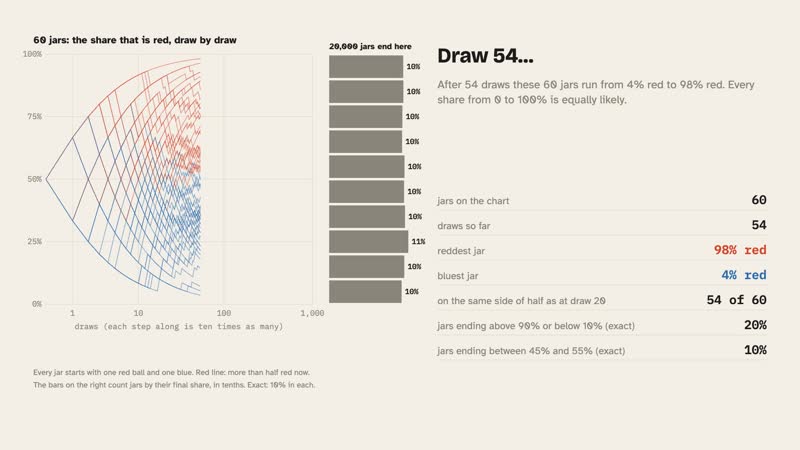
One red ball, one blue; each draw adds another of its colour. Every final share from 0 to 100% is equally likely.
 65simulation
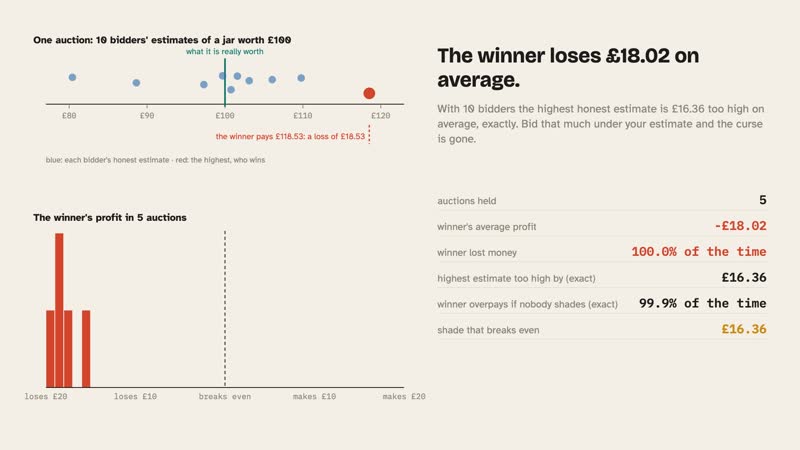
Every bidder guesses honestly and the winner still overpays, by more the more bidders there are.
Watch
Three to six minutes each, with chapters. Every description links back to its live page here.
In plain terms
Narration is an AI voice reading a written script. The pictures and numbers are not generated: they are computed or recorded.
A lift with no passengers, buses that never fill up. Simple enough to check, and the films say what a real system adds.
Satellite areas are good to a few per cent. Where a year is cloudy or an instrument changed, the film marks it.
A temperature record or a shrinking lake is shown as measured. Causes are outside what the picture can prove.
Sources